
The world’s largest reforestation project, known as the African Great Green Wall, received international attention and financial support at the UN's climate conference COP26 in Glasgow. Could this reforestation and revival project be the solution to underdevelopment and humanitarian suffering in the conflict-ridden Sahel region?
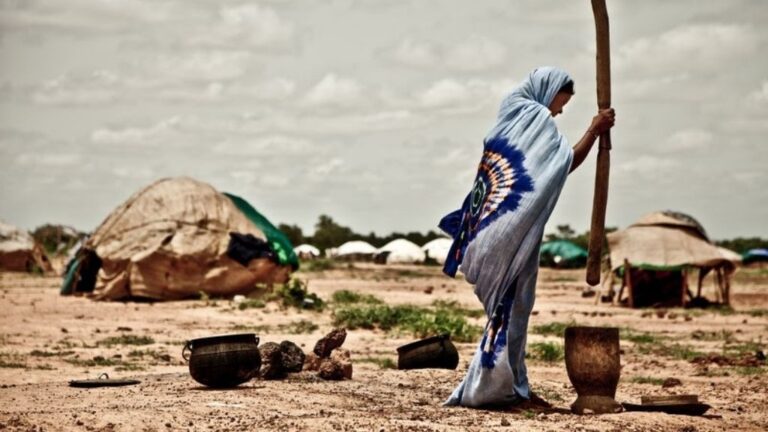
The semi-arid Sahel region stretches across the whole breadth of Africa, from the Atlantic Ocean to the Red Sea, and encompasses 10 countries – Algeria, Burkina Faso, Chad, Eritrea, Mali, Mauritania, Niger, Nigeria, Senegal and Sudan. The region is facing one of the world’s fastest growing humanitarian and displacement crises. The entrenchment of armed groups and indiscriminate violence against civilians has forced over 3 million people to flee across the region. In addition, droughts, famine and resource conflicts, further exacerbate human suffering and hardship in one of the poorest and most climate change vulnerable regions on the planet.
In an ambitious attempt to combat climate change and to improve the dire situation of the Sahel region, a massive reforestation project, known as Africa’s Great Green Wall (GGW), is implemented across 20 African countries. Africa’s dream of a Great Green Wall dates back to the 1970s, when vast swathes of fertile land in the Sahel region started to become severely degraded. Spearheaded by the African Union, this dream came into a life affirming reality in 2007, when 11 countries signed up for the pan-African initiative. This megaproject, which will likely become the world’s largest living structure, aims to restore 100 million hectares of land, sequester 250 million tonnes of carbon and create 10 million jobs in rural areas by 2030, according to the Worldbank.
Due to its promise to address the social, environmental and economic impacts of land degradation and desertification, the Great Green Wall (GGW) project received a major boost at UN’s Cop26 in Glasgow. World leaders, such as French President Emmanuel Macron, Prince Charles and the President of the African Development Bank, Akinwumi Adesina, announced their considerable financial support and commitment to the project.
A recent study in the journal Nature Sustainability demonstrated that long-running conflicts across the Sahel have delayed cultivation of large areas of degraded land. It remains to be seen if the recent international attention the GGW received at CO26 will be a catalyst for peace and revival of one of the planet’s poorest regions.
This text was written by Lund Magazine Group. The group is independent from FUF:s Utvecklingsmagasinet.


