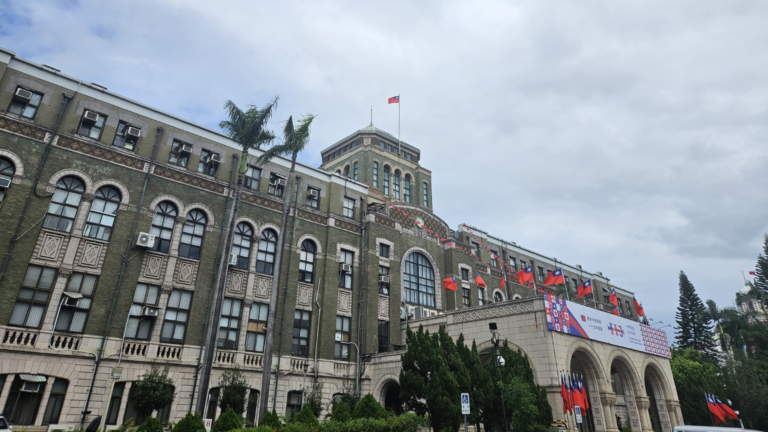
The court building that houses the Constitutional Court of Taiwan. The death penalty has long been debated in Taiwan, but this year the discussion has intensified when the Constitutional Court has to make a decisive decision. Photo: Saga Koberstein From/Utvecklingsmagasinet
Of: Saga Koberstein From
This year, a legal process has created discussions about whether or not the death penalty should be used in Taiwan. In September, the Constitutional Court's verdict finally came. The death penalty is maintained, but its exercise is limited. The reactions were not long in coming.
October 31, 2024, FUF-correspondents, Reportage
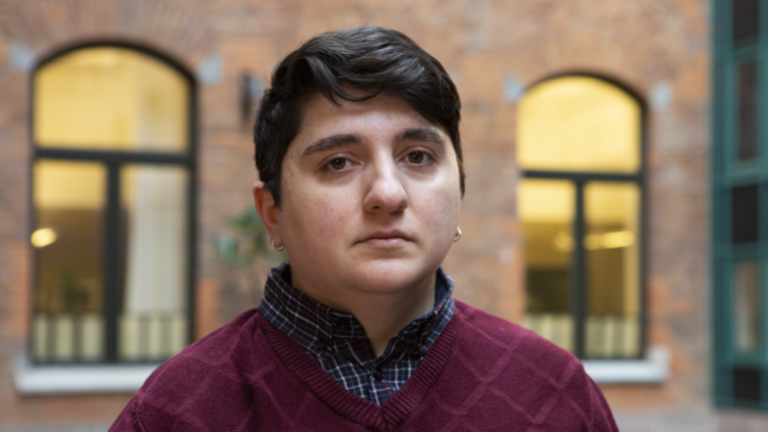
Natia Gvianishvili, senior international advocacy advisor at RFSL, believes that the new Georgian law will lead to a serious deterioration of the freedoms and rights of LGBTQI people. Photo: RFSL
Of: Benjamin Frisk
Around Eastern Europe, the struggle for the rights of LGBTQI people can be said to balance on the thin line between hope and despair. In Georgia, politics is marked by contradictions between the ambition of EU membership and controversial legislation that regulates civil society, the media and now the rights of LGBTQI people.
October 29, 2024, Interview

In Kutupalong, which is the world's largest refugee camp, almost a million Rohingya refugees live today, waiting for a safe return to their homeland Myanmar. The refugees lack work permits in Bangladesh and are therefore dependent on international humanitarian aid. Photo: Captain Raju. Source: Wikimedia commons.
Of: Adam hansen
The situation is uncertain for Rthe ohingya people in Southeast Asia. The vital humanitarian assistance has been reduced to the refugee camps in Bangladesh, where close to a million rohingy is located. At the same time, violence is escalating in the homeland of Myanmar, which threatens the uncertain future of the ethnic group.
March 5, 2024, Reportage
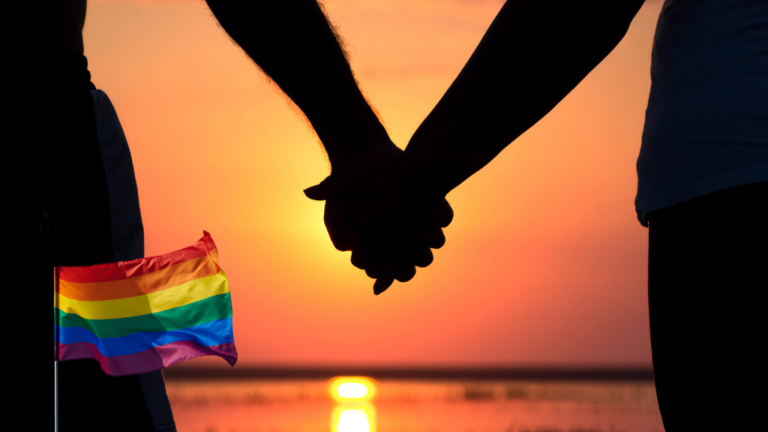
In May 2023, a strict anti-gay law came into force in Uganda. This has drastically changed the lives of many LGBTQI people in the country, who have either had to flee or risk facing oppression and persecution at home. Utvecklingsmagasinet spoke to two of them. Image: fanton_rd/Canva
Of: Ellinor Berglund
2023 Uganda's parliament passed a strict bill om hharsher punishments for LGBTQI people, which The development magazine reported on. Despite international criticism, the law finally came into force in May – which has put LGBTQI people and activists in the country in an even more vulnerable position than before. Development magazine has spoken to John Cyprian and Rebecca N Naava two ¥ Ugandan LGBTQI people who have both been affected by the change in the law.
- I'm keeping my fingers crossed that LGBTQI people in Uganda will feel safe, because it's hell there out, saygives John Cyprian.
February 5, 2024, Reportage

Poland is facing a change of government - but the road there is not entirely easy. Pictured: The leaders from the Citizens' Coalition are presented by Donald Tusk, former Prime Minister and President of the European Council (second person from the right). Photo: Club Lewisy. Source: Flickr.
Of: Edwin Borg
In October, the people of Poland voted for the Citizens' Coalition as the winning party. Now the parties, under the leadership of Donald Tusk, aim to end a dark chapter of gradual erosion of the country's democracy. But even if the majority is secured, a complex road ahead awaits with political uncertainty and a struggle for government power against the ruling Law and Justice party.
December 4, 2023, Development magazine explains

Several events during the Brazilian Carnival touch on issues of democracy and racism. Ilú Obá De Min is a group of Afro-Brazilian women in São Paulo who, through their drum parade, want to maintain and spread Afro-Brazilian culture in a country where black people are often discriminated against. Photo: Carmel Kotzen and Vilma Ellemark.
Of: Vilma Ellemark
Carnival in Brazil is not just a place for partying and pickpocketing – as many associate it with. In samba parades and street parties, various social problems are raised in creative ways. - It's not just a street party. It is a force for self-expression and resistance, expresses the Afro-Brazilian organization Ilú Obá De Min in connection with its drum parade.
July 11, 2023, Reportage

France is one of the countries that has built a border wall to prevent irregular migration and fight terrorism. Pictured: Demonstration against border controls in Calais. Photo: police62. Source: Wikimedia commons.
Of: Vendela Permat's Hammarbäck
Several countries are tightening their border controls and building border walls to reduce the influx of refugees and migrants. France is one of the countries that has built a border wall for this reason. At the same time, a study shows that border walls do not stop migration.
July 11, 2023, FUF-correspondents, Reportage

The sheep herder Abu Ahmad has herded his sheep for decades on the same land in Ras al Tin, but as Israel annexes Palestinian land, the space he is allowed to stay is shrinking, says Rebecca Henley, a former companion in Israel and Palestine. Photo: Rebecca Henley.
Of: Rebecca Henley
The Palestinian feverything asks us to tell their stories, but how long can the outside world continue to turn a blind eye? This is written by Rebecca Henley, former companion in Israel and Palestine.
July 11, 2023, Guest chronicle

A large number of new Israeli outposts in the West Bank and reclassification of land long used by Palestinians. Carl-Magnus Träff, political scientist and former companion in Israel and Palestine, believes that this is the reason why the companions are reporting more and more violations of human rights in the Jordan Valley. Pictured: The Israeli outpost near Ein Shibli. Photo: Carl-Magnus Träff.
Of: Carl-Magnus Meeting
After being out for three months as fbrewers in Palestine and Israel can I state that the development in the Jordan Valley, on the av Israel occupied The West Bank, is worrying. New Israeli outposts and reclassification of land makes it difficult to consider what is happening as anything other than annexation. It writes
July 11, 2023, Guest analysis

Ugandan President Yoweri Museveni has approved a law making it illegal to be gay. But what is happening in Uganda is not happening by chance. It is a result of the ongoing mobilization of the so-called anti-gender movement, writes Levi Karvonen, international communicator at RFSL. Photo: Foreign Commonwealth and Development Office/Anete Lusina. Source: Flickr/Pexels.
Of: Levi Karvonen
One of the harshest anti-LGBTQ bills the world has seen in a long time has now passed in Uganda. This is part of a global anti-gender movement, which is growing stronger across the African continent. At the same time that the anti-gender movement mobilizes politicians and legislators against human rights, they receive publicly funded aid from countries in the global north. This is written by Levi Karvonen, international communicator at RFSL.
June 1, 2023, Debate