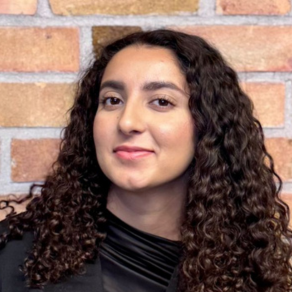

During the 2026 election year, FUF's foreign affairs monitors are there to guide you through the intricate party politics. What do the Moderates really think about international aid and Sweden's role in the world? Mehreen Hayat explains.
If you click on the “Foreign Policy” category on the Moderate Party’s website, you will primarily find descriptions of the party’s security policyHere, the party emphasizes that Sweden's security is strengthened through international cooperation, especially within NATO and the European Union.
Membership in NATO is described as a central part of strengthening Sweden's defense and creating common security with other countries. Russia is described as a central security threat to Sweden and Europe that must be met with stricter sanctions.
A central foreign, security and development policy priority is support for Ukraine. The Moderates describe this as Sweden's main foreign policy task. The support includes political, economic, military and humanitarian efforts. The party believes that the support is important for strengthening security throughout Europe.
“A clear and realistic foreign policy”
On their website, the Moderates write that they want to promote a "clear and realistic foreign policy"which will promote Swedish security and Swedish interests."
The Moderates say stand up for international law. The government's actions on these issues have, however, drawn criticism. Including Prime Minister Ulf Kristersson's (M) statements about "traditional folk law"in connection with the US and Israel's war of aggression against Iran" and government representatives' lukewarm reactions to Israel's methods in the wars in Gaza and Lebanon. In DN Debatt asked leading Swedish international law experts about the government truly believes that international law applies equally to all states.
While security policy is a clear priority for the Moderates, Agenda 2030, peace and conflict prevention work are highlighted to a limited extent or are completely absent from the party's description of foreign and development policy.
In 2003, the Riksdag adopted a Policy for Global Development, a framework that emphasizes the importance of integrating the perspectives of poor people and human rights into all policies. It is often said that policies should be coherent – efforts in different policy areas should preferably reinforce each other and not counteract each other. The framework was repealed by the Tidö government in 2024.
A criticized climate policy
Moderates stands by the goal decided by the Riksdag that Sweden will reach net zero emissions by 2045. At the same time, they emphasize that Sweden only accounts for around 0,1 percent of global emissions (the figure only includes territorial, not consumption-based emissions, ed. note.The party therefore wants to prioritize cost-effective climate measures abroad and climate-smart Swedish exports.
During the mandate period, assistance aimed at promoting climate adaptation or emission reduction has increased in both 2023 and 2024. But in 2025, climate aid was below 2021 volumes. However, it is difficult to compare the development of climate aid over time because Open Aid, the website that reports aid results, does not provide statistics for climate aid before 2021.
Ahead of the election, the Moderates have received low marks in environmental organizations' reviews of the parties' climate and environmental policies. In Climate inspector When the results of Greenpeace, the Swedish Society for Nature Conservation and the Swedish Society for Animal Rights are combined, the Moderates come in at the bottom. The low rating is linked, among other things, to the Tidö government's abolition of the aviation tax and reduced taxes on petrol and diesel.
Trade is highlighted as an important part of foreign policy
While the local area is often in focus, the Moderates also highlight the importance of global engagement. The party emphasizes that international free trade, stable economic relations and rules-based trade relations äare important for an export-dependent country like Sweden.
The Moderates also emphasize the importance of multilateral organizations, such as the United Nations, to address global crises and promote international cooperation. Therefore, they want to work to maintain the functioning of these organizations in a time of increased geopolitical tensions.
Relations with other countries, including major economies such as The United States and China, are described as important for Sweden's economy. According to the Moderates, trade policy should be characterized by stability, predictability and reduced trade barriers.
Purpose and focus of the assistance
Aid should be a tool for reducing poverty and contributing to development. This is explained by Katarina Tolgfors, a Moderate MP, when she talks about the party's aid policy in The IM podcast.
The party emphasizes that the ambition is to go from aid to trade – that partner countries will eventually become more economically independent. Moderates believes that this is best achieved through to promote economic development, for example by strengthening recipient countries' economic conditions and institutions and promoting innovation and entrepreneurship.
The Moderates emphasize that aid should be guided by quality, follow-up and results. The focus should be on the effects that aid has, rather than how much money is allocated. In line with this, the Moderates have within the Tidö Partnership have been involved in abolishing the one percent target – the target that one percent of gross national income (GNI) should be allocated to international aid. Since 2025, levels for international aid have been decided on a three-year basis and set against other political priorities in the state budget.
In 2026, the aid budget will be SEK 53 billion. A reduction of around SEK 20 billion compared to if the aid budget had been one percent of GNI.
The party justifies this by saying that a budget that follows GNI risks affecting the quality of aid. They refer to a “number of reports” that claim that aid traceability is poor. It is not clear from the party’s texts who these sources are.
Humanitarian aid, women, migration and Ukraine in focus for aid
– Aid is for those who need support. It is humanitarian aid that helps people in need, who have found themselves in a crisis or war situation. Our part in development aid is to strengthen democracy, strengthen institutions, increase engagement in civil society. But also support for military support and the building up of civil defense, explains Fredrik Ahlstedt, the Moderate Party's committee leader in the Foreign Affairs Committee, when FUF interviewed him in April.
In the IM podcast, Katarina Tolgfors also highlights support for women and girls, especially in areas such as sexual and reproductive health and rights (SRHR), as a particular priority. However, compilations from the women's rights organization Kvinna till kvinna show that the proportion of aid with gender equality as its main objective is the lowest in 16 years.
Geographically, the party wants to prioritize Sweden's surrounding area, especially Ukraine. While assistance to other regions should be directed to a greater extent through international organizations such as the UN system.
The Moderates also want to continue to link aid policy to other policy areas, such as migration, security and economic development. Costs for refugee reception in Sweden to continue taken out of the aid budget.
In recent years, the Tidö government, led by the Moderates, has also used aid as a tool in the work on returns, for example by making aid and trade with other countries conditional on them accepting own citizens who are to be expelled from Sweden.
As part of this, the government is said to have entered into a cooperation agreement with the government of Somalia. The government has also initiated talks about collaborations with Syria and Afghanistan.
The Moderates and global aid in brief
Does the party want to reintroduce the one percent target? No. The Moderates want to maintain the volume target and may consider lowering the aid framework further, at the very least down to the equivalent of 0,5 percent of GNI according to CONCORD Sweden.
The purpose of the assistance: To reduce poverty and contribute to development, with a focus on results and efficient use of resources.
Which geographical regions are prioritized? Mainly Sweden's surrounding area, especially Ukraine, and global efforts through the UN.
The party's five most important issues for aid:
- Support for Ukraine
- Humanitarian aid
- Sexual and Reproductive Health and Rights (SRHR)
- Economic development and trade
- Security policy