
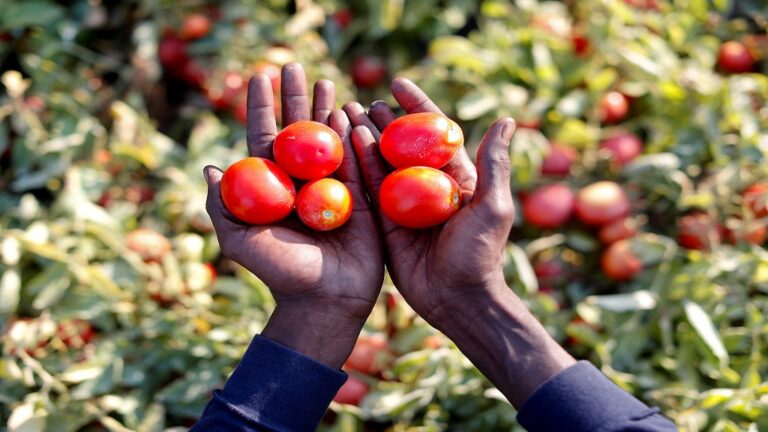
The agricultural sector in Southern Italy depends heavily on foreign labor forces coming from other EU member states or third countries. However, seasonal agricultural workers are more likely to experience violations of their rights. This is in order to reduce the producers' wage costs as well as the prices charged to consumers in many countries including the Nordics.
Agriculture in Southern Italy heavily relies on undeclared work. In 2019, an estimated 59 percent of the agriculture work was conducted without a regular employment contract, the majority of which was performed by foreigners. The lack of legal recognition makes violations of workers' rights easier. Overall, around 37 percent of the workforce in Italian agriculture is composed of foreigners. Despite minor differences depending on the years, foreign labor force in Italian agriculture mainly eat from Eastern Europe (Romania, Albania, Poland, Bulgaria, Macedonia), Northern Africa (Morocco, Tunisia), India and Senegal. The importance of foreign labor force for Italian agriculture has become evident during the ongoing Covid-19 pandemic, when limitations to individual mobility have significantly reduced the flux of foreign agricultural workers to Italy.
There is also a growing connection between the Mafia and the agricultural sector, the "Agromafia". In Southern Italy, a large part of the organization of agricultural labor is characterized by the so-called "capolarato": members of gangs act as intermediaries between employers and workers, including foreigners. A report issued in 2020 by the Osservatorio Placido Rizzotto identifies 180 000 workers as vulnerable and subjected to exploitation and “capolarato”. These gang members use illicit or violent methods and completely control workers' lives, from their arrival in Italy, to their wages and housing.
Placido Rizzotto Observatory and Oxfam report that violations of migrant workers' rights range from incredibly low wages, exhausting working shifts and unsafe working environments; to episodes of violence and racism. Migrant workers in Southern Italy are forced to live in poor conditions, such as tent cities or slums with no heating or running water. Women are victims of sexual harassment and violence. The situation has only worsened during the corona pandemic, where migrant workers are exceptionally exposed to infection and do not have access to health care.
An international system of exploitation
The problem of migrant workers' exploitation cannot be isolated to Italy as the goods are being distributed to other European countries. According to Oxfam, among these are Germany, Austria, Switzerland, France, Sweden and the UK. The agricultural exploitation in Southern Italy allows low-cost goods to be exported abroad successfully: fresh and canned tomatoes, oranges, strawberries, grapes, melons, watermelons and olives. In 2017, Danwatch, a Danish investigative media, documented how Danish supermarkets sell canned tomatoes from areas in Southern Italy, where migrants are working under "slave-like conditions".
Migrant workers' rights are thus tied to the chains of production and affected by markets around Europe. Their rights and working conditions are interlinked with an international system, where companies' interests can outweigh fair working conditions. Their exploitation is not isolated to Italy - the exploitation is tied to global markets.


