
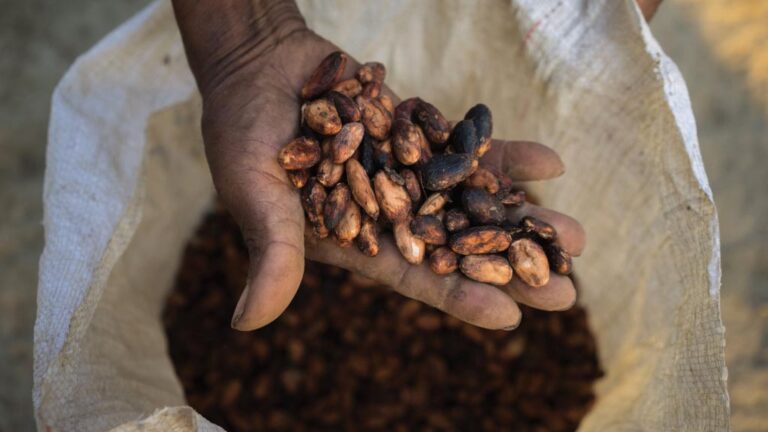
Slavery that holds the longest history in agriculture, has transformed into various forms, and is still part of our daily lives. Child labor, a reality in cocoa production in Côte d'Ivoire, gives a bitter aftertaste to the joyful treat of chocolate.
The earliest form of slavery appeared in the field of agriculture 5,000 years ago, when forced labor was used for the construction of irrigation systems in Mesopotamia, current Iraq. Agricultural slavery was historically a means for landowners to profit from advantageous yet labor-demanding crops, such as rice, sugar, cotton, and tobacco. Overtime, slavery in agriculture has evolved into different forms of modern slavery, covering forced labour, human trafficking, and slavery-like practices. According to the Report of the Global Estimates of Modern Slavery, agriculture, together with forestry and fishing, is enlisted as the fourth largest sector contributing to forced labour. Today, these undesirable practices could be identified in a great variety of food items: palm oil and seafood from Southeast Asia, coffee beans and nuts from South America, as well as cocoa from West Africa.
As much as chocolate is often considered as an irresistible confectionary by the public, the production of its former state - cocoa - is sometimes appalling. West African country like Côte d'Ivoire provides two-fifths of the cocoa demand worldwide, and is the largest cocoa supplier. In order to cope with the market pressures in this competitive industry, child labor is often sought as a way to lower the production cost. There is an estimate of 891,000 children in Côte d'Ivoire falling victim to such a cause, with many sold by their families or kidnapped by traffickers from Burkina Faso and Mali. In addition to long working hours in the sun, children are required to use chainsaws to clear forests for growing cocoa trees. Machetes are also regarded as a standard tool to climb trees and crack cocoa pods, which injure 4 out of 10 children. Beating is a common treatment if a child fails to carry heavy pod sacks that often require two people to lift.
The situation of child labor in cocoa agriculture is driven by several factors. The low cocoa prices is a result of cocoa overproduction and the unequal distribution of profits within the cocoa value chain. This reinforces farmers and cooperatives to seek the cheapest sources of labor, and often leads to exploitative working conditions. Furthermore, insufficient law enforcement worsens slavery in cocoa agriculture. A lack of awareness of labor rights due to a deficiency in education, and the absence of police stations in close proximity to the plantations for reporting such violations, make it difficult for national laws to be implemented..
To cultivate socially just cocoa, stakeholders at different levels are working with different tools. Government of Côte d'Ivoire is dedicated to eliminating child labor at the national level, while Modern Slavery Acts in the UK and Australia force businesses to combat modern slavery throughout their supply chains. At a societal level, initiatives like Behind the Brands are led by civil societies to reveal companies' compliance in realizing social responsibility for increasing public pressure. Social entrepreneurs bring forward the change by providing slavery-free alternatives to consumers. Every conscious purchase of chocolate bars could satisfy both the taste buds of consumers and sweeten the taste of freedom among growers.
"Every time you spend money, you're casting a vote for the kind of world you want." - Anna Lappe


