
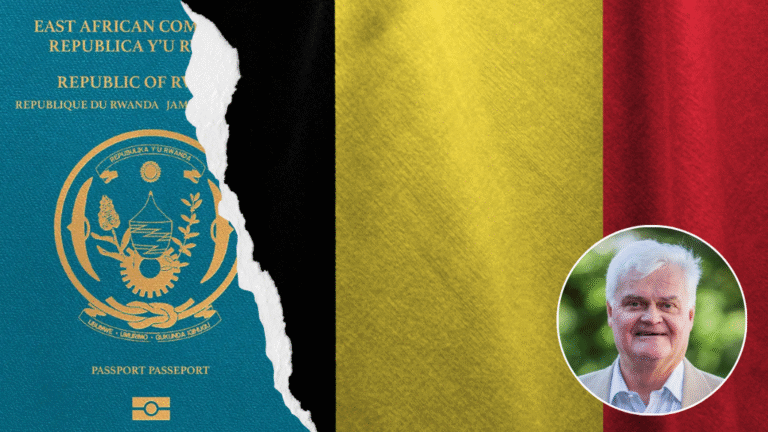
After a diplomatic dispute flared up between Belgium and Rwanda, Rwandans who want to visit Sweden can no longer apply for a visa in Kigali. Instead, they must apply to neighboring Kenya. But the difficulties for Rwandans visiting the Schengen area do not stop there. Björn Sundeby, chairman of an IST Group with operations in Rwanda, has noted that his own and partner company's staff are no longer being granted their visas. The reason? Belgium has reportedly blocked the visas.
For many European companies operating in Africa – staff exchanges are crucial. Africa’s greatest asset is its youth, and when young professionals employed by European companies get to travel, learn from colleagues in Europe and return with new insights, both sides benefit.
But Belgium's practice of blocking Schengen visa applications from Rwandans – even when they do not plan to travel to Belgium – sends a deeply worrying signal. Targeting ordinary Rwandans under the pretext of visa control is not only short-sighted, it also tarnishes the overall credibility of Europe. Belgium cannot be allowed to unilaterally decide who is allowed to have contact with the rest of Europe.
Maria Malmer Stenergard, Sweden's Minister for Foreign Affairs, put it best in her speech during Africa Day on May 27, 2025 in Stockholm:
“A vibrant market economy, private sector development, entrepreneurship, trade and reducing bureaucracy are important building blocks for growth. … It is no coincidence that Sweden – and now the EU – focuses so much on competitiveness and increasing trade with our partners.”
Just a week earlier, Jozef Síkela, EU Commissioner for International Partnerships, reiterated this ambition at the signing of the EU CAF Cooperation Agreement in Cairo on 18 May 2025:
– Africa is the youngest continent – full of energy, talent and ambition. And we believe it is full of potential. Together – Europe and Africa – we must do our best to transform this potential into real opportunities.
IST Group, a Swedish-based international EdTech company, has been actively investing in Africa in recent years. The company’s presence is particularly noticeable in Rwanda, where it has established businesses such as IST Africa and IST Legal, and invested in local initiatives such as Academic Bridge and KudiBooks. In total, the Rwanda-based companies within IST Group employ almost 100 full-time employees – a testament to the company’s long-term commitment and the region’s growing potential.
Despite this commitment, challenges are inevitable. Companies exist to solve problems and create value – all within the framework of a functioning market economy. But today, a disturbing echo of colonial thinking is returning from Brussels. It seems that Belgium is actively opposing EU-Africa trade. But how?
In recent months, staff from IST Africa and its partner companies have had their Schengen visas revoked inexplicably, with Belgium being a recurring actor behind these disruptions. While the political tensions between Belgium and Rwanda are well known, it is deeply irresponsible for a single Member State to impose punitive administrative barriers affecting professionals who have nothing to do with these conflicts. These measures appear to be based more on old grudges than actual policy – and their consequences reach far beyond Belgium.
Europe continues to preach partnership with Africa, but Belgium acts as a gatekeeper. By targeting Rwandan citizens with unfounded visa revocations, Belgium is countering the EU’s broader strategy. If this behavior is allowed to continue without action, Europe’s vision of mutual growth will be little more than a parachute jump – without a parachute. Belgium’s actions run counter to the principles of a free and fair market – and it is time for EU policymakers to consider whether one country should really have unfettered power over the mobility of an entire continent.
When a country hijacks Schengen, it doesn’t just hurt Rwanda – it damages Europe’s credibility, competitiveness and claims to partnership. Belgium’s grip on Rwanda’s business mobility is not just diplomatically irresponsible; it is shooting itself in the foot, while hurting other European economies. If Europe is really serious about mutual growth with Africa, it must address the gatekeeper within itself.
On the diplomatic crisis between Belgium and Rwanda
In March this year, the club an EU sanctions package against leaders of the Congolese rebel group M23 and several Rwandan representativesThe background to the listing of the Rwandan representatives is that they are accused of having stationed troops in the Democratic Republic of Congo and of having supported the conflict in order to gain a share of the country's mineral extraction.
Belgium is said to have been the driving force behind the EU's sanctions process. Rwanda responded to the sanctions package by breaking diplomatic contacts with their former colonizer. Whereupon Belgium also announced that they were also breaking off diplomatic relations with the country.
The Belgian mission in Kigali previously handled Schengen visa applications for most countries, including Sweden, but that operation is currently closed. Rwandans who want to travel to Sweden must therefore trip to Nairobi to complete their application.


